CLASP Training Area
Community Lifesaving Skills Training
Hands-on community training in CPR/AED, first aid, bleeding control, and practical bystander action during the first critical minutes of an emergency.
Building the Confidence to Act
Knowing that CPR, AEDs, first aid, and bleeding control are important is different from having practiced those skills.
- Is this person experiencing a life-threatening emergency?
- Should 911 be called immediately?
- Is CPR needed?
- Is an AED available?
- Is bleeding life threatening?
- Should direct pressure be applied?
- Is wound packing appropriate?
- Is a tourniquet needed?
- What can safely be done while waiting for emergency medical services?
- What should not be done?
IFCRR training gives participants an opportunity to work through these decisions and practice the associated skills. The objective is not to turn community members into professional responders. It is to help them become more capable bystanders.
Community Lifesaving And Emergency Skills Program
Lifesaving-skills training is delivered through IFCRR's Community Lifesaving And Emergency Skills Program (CLASP).
CLASP combines hands-on skills development with emergency recognition and practical decision-making.
- Certification courses
- Community skills sessions
- Workplace training
- School or organizational programs
- Preparedness events
- Pilot programs
- Integrated preparedness and lifesaving-skills training
CPR
Cardiac arrest requires immediate recognition and action.
- Recognizing cardiac arrest
- Activating emergency medical services
- High-quality chest compressions
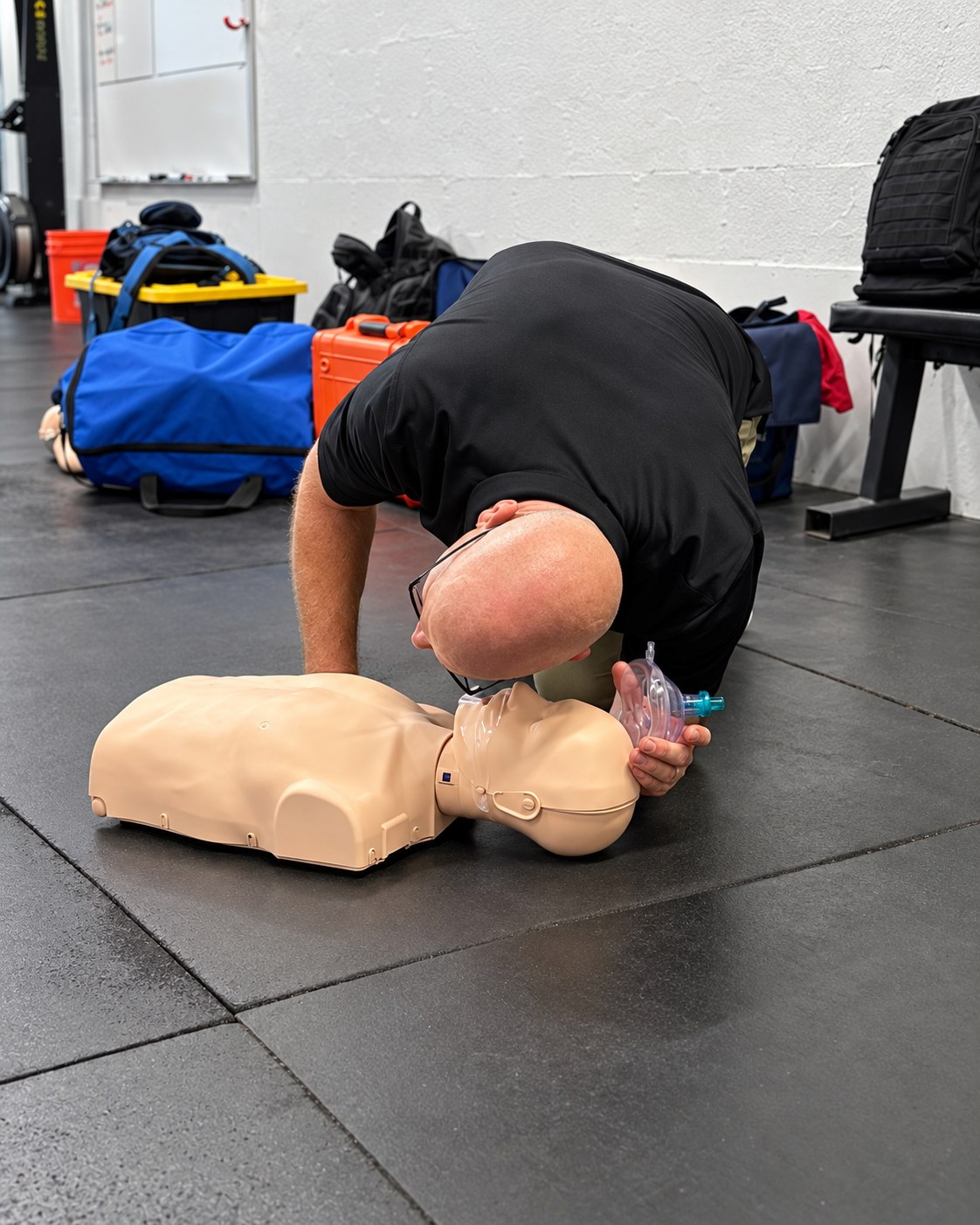
- Appropriate use of rescue breaths when included in the course
- Hands-only CPR where appropriate
- Working with another responder
- Continuing CPR until an AED or professional assistance becomes available
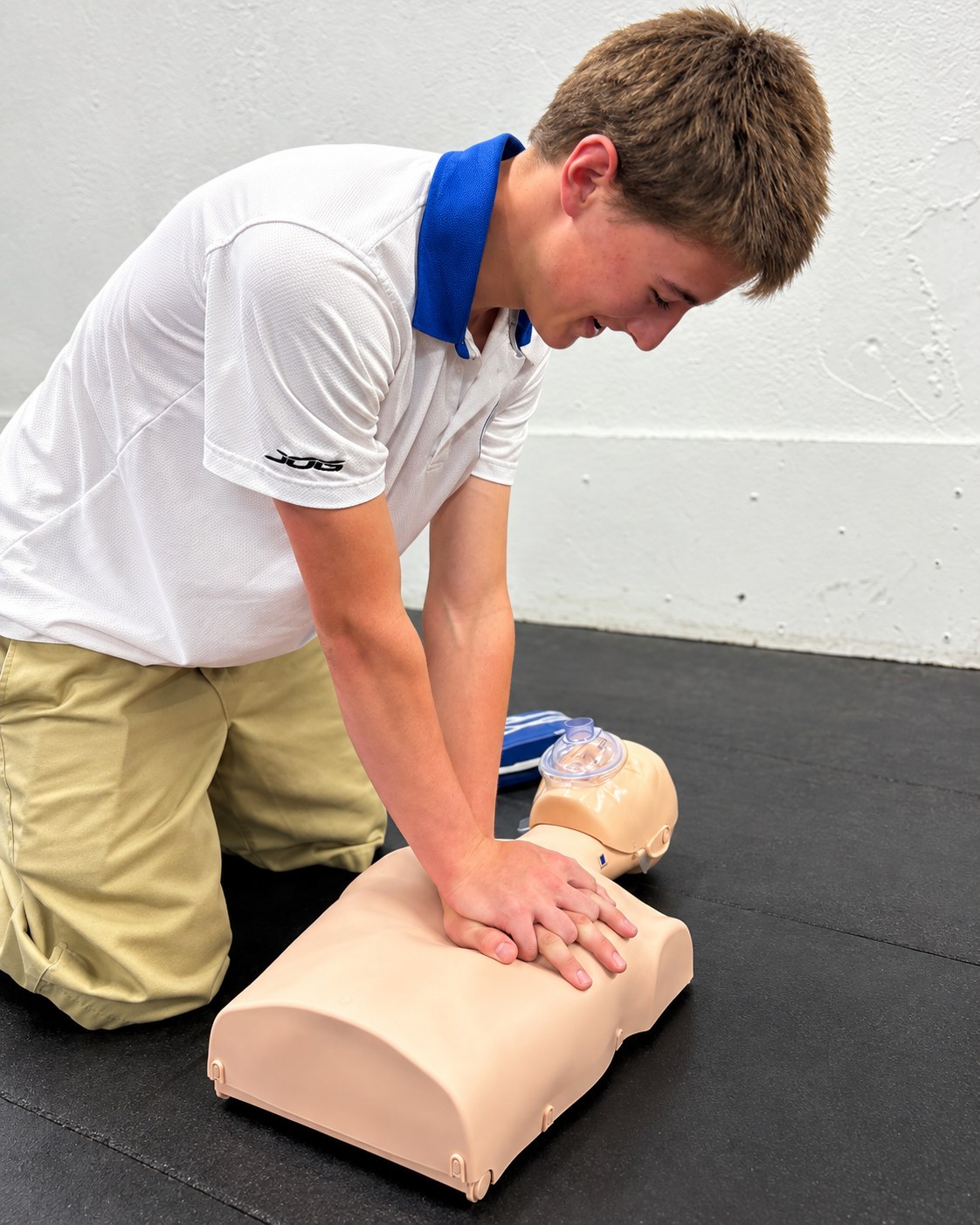
Hands-on practice with training manikins helps participants develop familiarity with compression technique and the physical effort required to perform CPR.
Automated External Defibrillators
AEDs are designed to guide users through the process of providing defibrillation when indicated.
- Recognizing when an AED may be needed
- Locating and retrieving an AED
- Turning the device on
- Following voice or visual prompts
- Correct pad placement
- Maintaining safety during rhythm analysis and shock delivery
- Coordinating AED use with CPR
One of the most important objectives is reducing hesitation. Participants should understand that an AED provides instructions and analyzes the patient's heart rhythm before advising a shock.
First Aid
First-aid training can help participants recognize and respond to common injuries and medical emergencies until professional care is available.
- Medical-emergency recognition
- Scene safety
- Calling 911
- Breathing emergencies
- Injuries
- Burns
- Allergic reactions
- Heat-related illness
- Other first-aid situations appropriate to the course
The specific content depends on whether the program is a formal certification course or a focused community-training session.
Severe-Bleeding Control
Life-threatening bleeding may require immediate action.
Recognizing Life-Threatening Bleeding
Participants learn to identify bleeding that requires immediate intervention.
Direct Pressure
Participants practice applying firm, continuous pressure to control bleeding.
Wound Packing
Where appropriate to the training, participants may practice packing certain wounds with training gauze and maintaining pressure.
Tourniquets
- When a tourniquet may be appropriate
- Positioning
- Tightening the device
- Securing the windlass or mechanism
- Recognizing effective application
- Recording or communicating application information
Hands-on practice is emphasized because equipment that seems simple when viewed in a package may be more difficult to use under stress.
STOP THE BLEED®
IFCRR may provide STOP THE BLEED® training through appropriately qualified instructors.
STOP THE BLEED® instruction focuses on helping members of the public recognize life-threatening bleeding and take immediate action using techniques such as direct pressure, wound packing, and tourniquet application.
STOP THE BLEED® may be offered as a focused training session or incorporated into a broader CLASP pilot when appropriate.
Certification and Community Training Options
Certification Courses
Where appropriate, IFCRR may offer recognized certification courses such as:
- American Heart Association Heartsaver® First Aid CPR AED
- American Heart Association Basic Life Support (BLS)
- STOP THE BLEED® training
Certification courses are delivered by appropriately qualified instructors and under applicable Training Center or program requirements.
Community Lifesaving Skills Training
Not every group needs a formal certification card. Community training can provide practical exposure to lifesaving actions without requiring the time or structure of a full certification course.
- Emergency recognition
- Calling 911 effectively
- Hands-only CPR
- AED awareness and practice
- Severe-bleeding recognition
- Direct pressure
- Tourniquet application
- Basic first-aid awareness
This format can be particularly useful for community events, preparedness fairs, neighborhood groups, schools, or larger audiences.
Who This Training Is For
- Residents and families
- Neighborhood groups
- Community organizations
- Nonprofit organizations
- Schools
- Youth-serving organizations
- Employers and workplaces
- Healthcare organizations
- Preparedness coalitions
- Faith-based organizations
- Public agencies
- Community-benefit programs
- Volunteer organizations
- Preparedness fairs and public events
Training for Employers and Organizations
Organizations may want employees to have greater capability during medical emergencies.
- CPR
- AED use
- First aid
- Severe-bleeding control
- Emergency recognition
- Activation of emergency medical services
- Immediate actions before professional responders arrive
Programs can also be combined with emergency-preparedness training addressing evacuation, shelter-in-place, emergency communications, and other organizational procedures.
Hands-On Practice
Lifesaving skills should not exist only as concepts. Depending on the course, IFCRR may use:
- CPR manikins
- AED trainers
- Tourniquets
- Wound-packing trainers
- Training gauze
- First-aid supplies
- Scenario-based exercises
- Other appropriate training equipment
Participants are given opportunities to physically perform key skills rather than only watch an instructor demonstrate them.
Hands-on practice also helps identify common problems such as incorrect hand placement, insufficient CPR compression depth, AED pad-placement errors, poor tourniquet positioning, failure to tighten a tourniquet adequately, ineffective wound packing, and hesitation in activating emergency services.
Instructor-Led, Hands-On Training
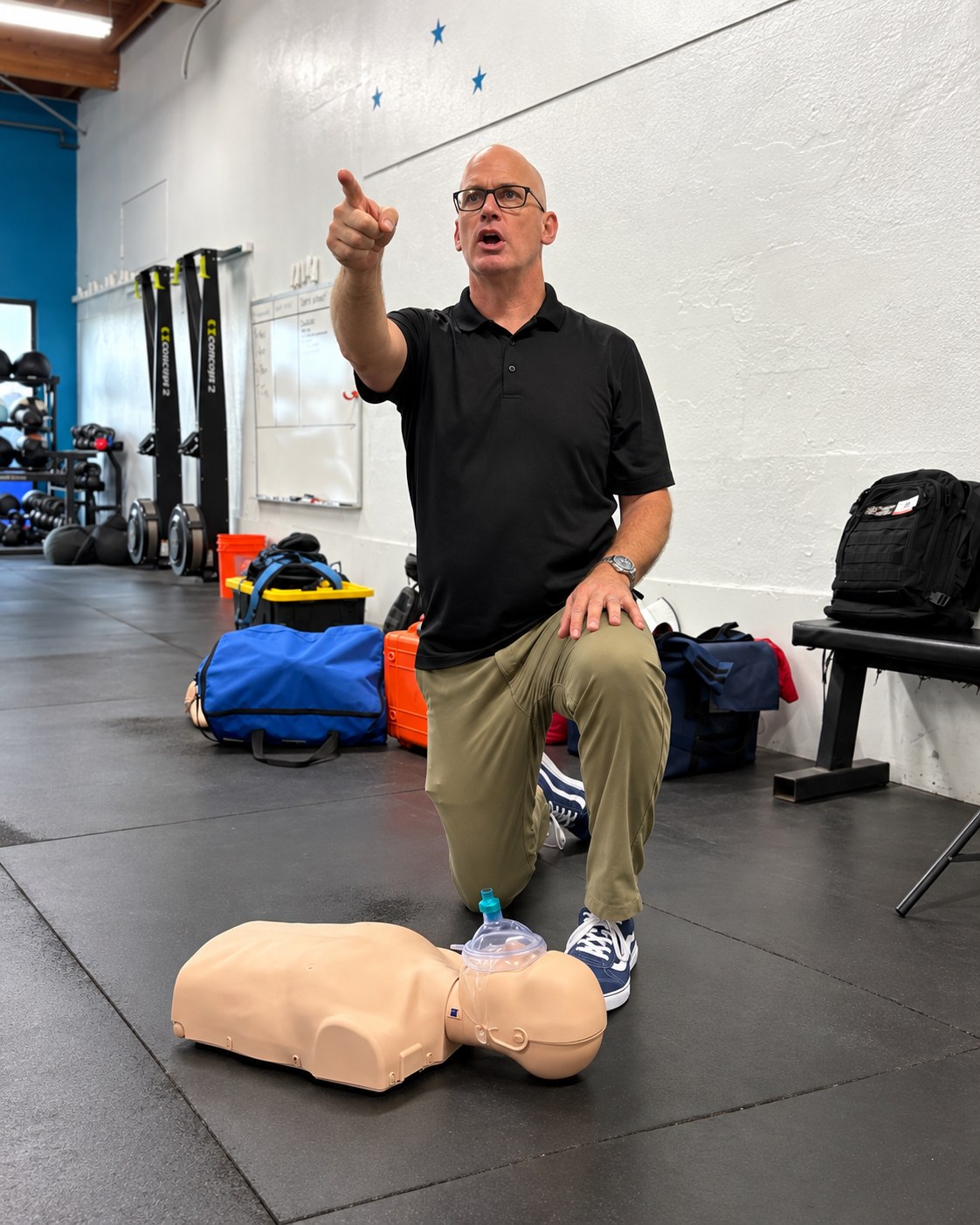
IFCRR classes are built around practical demonstration, coaching, and repetition so participants can practice key actions rather than only hear about them.
Emergency Recognition and Decision-Making
Technical skill alone is not enough. Participants also need to recognize when a skill should be used.
1. Is the scene reasonably safe to approach?
2. What appears to be wrong?
3. Does the situation require immediate 911 activation?
4. What lifesaving action is appropriate?
5. What equipment is available?
6. What should be done while waiting for professional responders?
7. Has the patient's condition changed?
8. Is another action now required?
This helps connect individual skills into a practical response sequence.
Integrating Preparedness and Lifesaving Capability
CLASP can be delivered independently or combined with IFCRR's Community Hazard Readiness & Risk Reduction Program (CHRRP).
An integrated program may help participants learn both before-the-incident preparedness and during-the-incident lifesaving capability.
Prepared before the incident. Capable during the incident.
Initial CLASP Pilot Opportunities
IFCRR is currently seeking organizations and communities interested in hosting initial CLASP pilot programs.
- Community CPR/AED
- First aid
- Severe-bleeding control
- STOP THE BLEED®
- Workplace lifesaving skills
- School or community training
- Preparedness-fair demonstrations
- Integrated CHRRP + CLASP training
Pilot evaluation may examine participant knowledge, skills performance, CPR/AED confidence, severe-bleeding-control capability, emergency recognition, willingness to act, participant feedback, partner feedback, training logistics, and opportunities for improvement.
Pilot Cost and Access
For strategically appropriate initial pilots, IFCRR may provide some or all program services at no cost to the participating organization through volunteer instructor and staff time.
Costs may still arise from certification cards, consumable training materials, participant materials, travel, venue requirements, or other direct program expenses.
Depending on the project, these costs may be absorbed by IFCRR, supported by the partner, shared, or covered through sponsorship or other funding.
Submitting a pilot request does not create a financial commitment for either IFCRR or the requesting organization.
Request a Community Lifesaving Skills Pilot
If your organization or community wants participants to become more capable during medical emergencies, IFCRR would like to discuss a potential pilot.
- Who you want to train
- Approximately how many participants may attend
- Whether certification is needed
- Which skills are most important
- Where the training could occur
- What you would like participants to gain from the program
IFCRR can work with you to determine whether a certification course, community skills program, or integrated preparedness pilot is the best fit.
Recognize the Emergency. Take Action. Help Until Responders Arrive.
The first person able to help during an emergency is often someone who was already there.
Practical training can help people recognize what is happening, activate professional assistance, and take appropriate lifesaving action during the minutes before responders arrive.